Saturday, June 19, 2021

KILIMANJARO CLIMB UMBWE ROUTE

UMBWE ROUTE 6 DAYS

The Umbwe route is a short, steep and direct route. It is considered to be very difficult and is the most challenging way up Mount Kilimanjaro. Due to the quick ascent, Umbwe does not provide the necessary stages for altitude acclimatisation. Although the traffic on this route is very low, the chances of success are also low. The route is offered at a minimum of six days, though seven days is recommended when attempting this route.

The Umbwe route should only be attempted by those who are very strong hikers and are confident in their ability to acclimatize. However, overall, the Umbwe route is not recommended and we discourage its usage for our clients.


Mount Kilimanjaro
Elevation 5895m
Location Tanzania, Africa
Number of Climbers 25,000 Annually
 
- Day 1 Moshi (915 m/3,000 ft)
Arrive at the Kilimanjaro International Airport. You will be met at the airport and transferred to Kindoroko hotel in Moshi town for your overnight.


- Day 1 Moshi (915 m/3,000 ft) to Umbwe Gate (1,800 m/5,905 ft) to Umbwe Camp (2,800 m/9,190 ft) 8 km, 5-7 hours Montane Forest
Your day starts early with a briefing, followed by breakfast and an hour drive from Moshi to Umbwe Village (1,490 m/4,890 ft) where your guides and porters pack your equipment and supplies, and give you a lunch pack. You start your ascent at the small Umbwe Gate just above the village and follow a gentle winding vehicle track for an hour to a signboard that announces the small steep Umbwe trail. The introduction is over, and you now climb up for several hours through a dense forest of rubber trees and giant fig trees. In places, you must scamper up steep sections of roots and rock. The Umbwe Camp is in the forest, and there are some caves nearby. You will be greeted here with a graciously served hot meal.

- Day 2 Umbwe Camp (2,800 m/9,190 ft) to Barranco Camp (3,900 m/12,800 ft) 8 km, 4-5 hours Semi-Desert
Your day starts early with a steaming cup of tea or coffee. After breakfast, you will climb steeply through thinning forest glades to Giant Erica, Heather, and drier air. You continue up a ridge that drops steeply on both sides, and hopefully, the clouds will part to reward you with a view of Uhuru Peak looming overhead. After lunch, you enter a zone of giant groundsels (Scenario Kilimanjaro) that seem to guard the heights, and this garden is one of Kilimanjaro's special treasures.
- Day 3 Barranco Camp (3,900 m/12,800 ft) to Karanga Camp (4,200 m/13,780 ft) 7 km, 4 hours Alpine Desert
After breakfast, we continue up a steep ridge to the great Barranco Wall, and then you climb this imposing obstacle, which turns out to be easier than it looks. Topping out just below the Heim Glacier, you can now appreciate just how beautiful Kilimanjaro really is. With Kibo's glaciers soaring overhead, you descend into the lush Karanga Valley to the Karanga Valley campsite. From the camp, you can look east and see the jagged peaks of Mawenzi jutting into the African sky. After a hot lunch in camp, your afternoon is at leisure for resting or exploring. This short day is very important for your acclimatization, since your summit push is about to start. Scramble easily to the top of the Great Barranco and then a traverse over screes and ridges to the Karanga Valley campsite (3h, 4000m.), beneath the icefalls of the Southern Glaciers.
- Day 4 Karanga Camp (4,200 m/13,780 ft) to Barafu Camp (4,550 m/14,930 ft) 13 km, 8 hours Alpine Desert
In the morning, you hike east over intervening ridges and valleys to join the Mweka Route, which will be your descent route. Turn left toward the mountain and hike up the ridge through a sparse landscape for another hour to the Barafu Hut where you will receive a hot lunch. The last water on the route is in the Karanga Valley; there is no water at Barafu Camp, even though Barafu is the Swahili word for The famous snows of Kilimanjaro are far above Barafu Camp near the summit of the mountain. Your tent will be pitched on a narrow, stony, wind-swept ridge, so make sure that you familiarize yourself with the terrain before dark to avoid any accidents. Prepare your equipment and warm clothing for your summit climb, and drink a lot of fluids. After an early dinner, go to bed for a few hours of precious sleep.
- Day 5 Summit Day! Barafu Camp (4,550 m/14,930 ft) to Uhuru Peak (5,895 m/19,340 ft) to Mweka Camp (3,100 m/10,170 ft) 7 km up, 23 km down 8 hours up, 7-8 hours down scree and seasonal snow
You will rise around 11:30 PM, and after some steaming tea and biscuits, you shuffle off into the night. Your 6-hour climb northwest up through heavy scree between the Rebmann and Ratzel glaciers to Stella Point on the crater rim is the most challenging part of the route for most climbers. At Stella Point (5,685 m/18,650 ft) you stop for a short rest and a chance to see a supremely sanguine sunrise. At Stella Point you join the top part of the Marangu Route, but do not stop here too long, as it will be extremely difficult to start again due to cold and fatigue. Depending on the season and recent storms, you may encounter snow on your remaining hike along the rim to Uhuru Peak. On the summit, you can enjoy your accomplishment and know that you are creating a day that you will remember for the rest of your life. After your 3-hour descent from the summit back to Barafu Camp, you will have a well-earned but short rest, collect your gear, and hike down a rock and scree path into the moorland and eventually into the forest to Mweka Camp (3,100 m/10,170 ft). This camp is in the upper forest, so you can expect mist or rain in the late afternoon. Dinner, and washing water will be prepared, and the camp office sells drinking water, soft drinks, chocolates, and beer!
- Day 6 Mweka Camp (3​,100 m/10,170 ft) to Mweka Gate (1,980 m/6,500 ft) to Moshi (890 m/2,920 ft) 15 km, 3 hours Forest
After a well-deserved breakfast, it is a short, scenic, 3-hour hike back to the park gate. Don't give your porters any tips until you and all your gear have reached the gate safely, but do remember to tip your staff at the gate. At Mweka Gate, you can sign your name and add details in a register. This is also where successful climbers receive their summit certificates. Climbers who reached Stella Point are issued green certificates and those who reached Uhuru Peak receive gold certificates. From the Mweka Gate, our pickup and transfer team will take you back to Kindoroko hotel in Moshi town for an overdue shower and comfortable night.

Price:$1700 Per Person

INCLUDED IN THE PACKAGE:
Private transport to & from Kilimanjaro International Airport to your accommodations in Moshi.
2 nights of accommodation in Moshi in FULL BOARD (FB). (WERUWRU RIVER LODGE OR PARK VIEW HOTEL)
Transportation to & from the Kilimanjaro gate
Park entry fees,
Camping fees
Crater fee (if any)
Team Kilimanjaro Rescue fees
18% VAT on tour fees & services
4 Season mountain tents
Double layered Sleeping Mats 4 inches (10cm) thick
Friendly and professional mountain guides, cook and porters
3 meals daily while on the mountain
Enough treated & filtered drinking water throughout the trek
Hot water for washing
Fair wages for the mountain crew as approved by the Kilimanjaro National Park Authority (KINAPA), Kilimanjaro Association of Tour Operators (KIATO)
Government taxes
Portable oxygen tanks
Ox meter
Emergency first-aid kit
Stethoscope
Portable flush toilet with a toilet and tent
Mountain climbing certificates

EXCLUDED IN THE PACKAGE:
Drinks at your hotel before and after climb.
Travel insurance
Flights
Laundry (Available at hotel)
Personal items and toiletries
Tips for guides, porters and cook

KILIMANJARO CLIMB RONGAI ROUTE


Rongai Route 6 days

The Rongai route is the only route that approaches Kilimanjaro from the north, close to the Kenyan border. Though gaining popularity amongst climbers, Rongai has low traffic. It is the preferred route for those looking for an alternative to the crowded Marangu route, for those who would like a more remote hike, and for those who are climbing during the rainy season (the north side receives less precipitation).
The minimum number of days required for this route is six days, and seven days are recommended. Although the scenery is not as varied as the western routes, Rongai makes up for this by passing through true wilderness areas for days before joining the Marangu route at Kibo camp. This route descends down the Marangu route. Rongai is a moderately difficult route, and is highly recommended, especially for those with less backpacking experience.
Mount Kilimanjaro
Elevation 5895m
Location Tanzania, Africa
Number of Climbers 25,000 Annually


Day 1:
We will pick you up from your hotel in Arusha at 08:00 and drive to the Marangu Gate to obtain permits and clearance. Depart from Marangu and drive to Rongai Gate (1,800 M) where you begin your trek of 3-4 hours today, ascending to Cave Camp at 2,750 M. for dinner and overnight.
Meal Plan: {L, D}

Day 2:
Today you will trek 3-4 hours again before reaching the Kikelewa Camp at 3,500 M. where you will have dinner and overnight.
Meal Plan: {B, L, D}

Day 3:
Hike to Tarn Hut camp today where you will overnight at 3,850 M.
Meal Plan: {B, L, D}.

Day 4:
You will trek to Kibo Hut today, about 4-5 hours, 4,700 M, from where you will begin your ascent to the summit.
Meal Plan: {B, L, D}

Day 5:
Shortly after midnight, you will arise to begin your ascent to the summit, reaching Uhuru Peak by sunrise. You will descend to Horombo Camp for dinner and overnight, 3,820 M..
Meal Plan: {B, L, D}

Day 6:
After breakfast, depart Horombo Camp and descend to the Marangu Gate in about 5-6 hours to collect your certificate and be met by the vehicle to return to your hotel. .
Meal Plan: {L, D}


Price:$1750 Per Person

INCLUDED IN THE PACKAGE:
  • Private transport to & from Kilimanjaro International Airport to your accommodations in Moshi.
  • 2 nights of accommodation in Moshi in FULL BOARD (FB). (WERUWRU RIVER LODGE OR PARK VIEW HOTEL)
  • Transportation to & from the Kilimanjaro gate
  • Park entry fees,
  • Camping fees
  • Crater fee (if any)
  • Team Kilimanjaro Rescue fees
  • 18% VAT on tour fees & services
  • 4 Season mountain tents
  • Double layered Sleeping Mats 4 inches (10cm) thick
  • Friendly and professional mountain guides, cook and porters
  • 3 meals daily while on the mountain
  • Enough treated & filtered drinking water throughout the trek
  • Hot water for washing
  • Fair wages for the mountain crew as approved by the Kilimanjaro National Park Authority (KINAPA), Kilimanjaro Association of Tour Operators (KIATO)
  • Government taxes
  • Portable oxygen tanks
  • Ox meter
  • Emergency first-aid kit
  • Stethoscope
  • Portable flush toilet with a toilet and tent
  • Mountain climbing certificates

EXCLUDED IN THE PACKAGE:
  • Drinks at your hotel before and after climb.
  • Travel insurance
  • Flights
  • Laundry (Available at hotel)
  • Personal items and toiletries
  • Tips for guides, porters and cook

KILIMANJARO CLIMB MARANGU ROUTE


KILIMANJARO CLIMB LEMOSHO ROUTE


 Lemosho Route 7 Days

The Lemosho Route is widely considered to be the best route on Mount Kilimanjaro. Not too long ago, there were only two main routes used to climb Kilimanjaro – the Marangu (Coca Cola) route and the Machame (Whiskey) route. But as Tanzania’s tourism industry flourished, the Kilimanjaro park authority created more trails to African’s highest peak. Lemosho, a relatively new route, is preferred by reputable operators due to its beauty, remoteness and success rate. In short, it maximizes the chances that a climber will reach the summit, and enjoy the experience overall. The Lemosho route can be done in as little as six days (five nights) on the mountain.
However, it is ideally tackled over eight days (seven nights) for a better altitude acclimatization schedule. The trek begins at Londorossi Gate, located in the western base of mountain, within its lush, fertile rainforest. The route heads across the Shira Plateau, before circling along the southern circuit halfway around the mountain, exposing the climber to great views from all angles. The approach to the summit is made from the east, and the descent follows the Mweka trail.


Mount Kilimanjaro
Elevation 5895m
Location Tanzania, Africa
Number of Climbers 25,000 Annually


Days Day 1:
We will pick you up from your hotel in Arusha at 08.00 and drive to the Londross Gate to obtain permits and clearance. After registration and clearance, begin your trek to Forest Camp where you will have dinner and overnight (3-4 hours of trekking). (2,650 M)
Meal Plan: {L, D}

Day 2:
Trek from Forest Camp to Shira 1 Camp, 4-5 hours of trekking, where you will have dinner and overnight. 3,610M)
Meal Plan: {B, L, D}

Day 3:
Today you have a 3-4 hour trek from Shira 1 to Shira 2 Camp where you will have dinner and overnight. (3,840M)
Meal Plan: {B, L, D}

Day 4:
From Shire 2 Camps, trek about 6 hours to Barranco Camp (3,950 M) for dinner and overnight.
Meal Plan: {B, L, D}

Day 5:
Today you will trek from Barranco to Barafu Camp. You will have dinner and overnight at Barafu (4,550 M).
Meal Plan: {B, L, D}

Day 6:
You will rise shortly after midnight to begin your final ascent to the top of Kilimanjaro. You should reach the summit by sunrise after about 4 hours and then descend to Mweka Camp 3,100 M (4 hours) for dinner and overnight.
Meal Plan: {B, L, D}

Day 7:
Today it will be about 3-4 hours to reach the Mweka Gate where you receive your Summit Certificate and drive back to Arusha and your hotel.
Meal Plan: {B, L}


Price:$1900 per person

​INCLUDED IN THE PACKAGE:
Private transport to & from Kilimanjaro International Airport to your accommodations in Moshi.
2 nights of accommodation in Moshi in FULL BOARD (FB). (WERUWRU RIVER LODGE OR PARK VIEW HOTEL)
Transportation to & from the Kilimanjaro gate
Park entry fees,
Camping fees
Crater fee (if any)
Team Kilimanjaro Rescue fees
18% VAT on tour fees & services
4 Season mountain tents
Double layered Sleeping Mats 4 inches (10cm) thick
Friendly and professional mountain guides, cook and porters
3 meals daily while on the mountain
Enough treated & filtered drinking water throughout the trek
Hot water for washing
Fair wages for the mountain crew as approved by the Kilimanjaro National Park Authority (KINAPA), Kilimanjaro Association of Tour Operators (KIATO)
Government taxes
Portable oxygen tanks
Ox meter
Emergency first-aid kit
Stethoscope
Portable flush toilet with a toilet and tent
Mountain climbing certificates

EXCLUDED IN THE PACKAGE:
Drinks at your hotel before and after climb.
Travel insurance
Flights
Laundry (Available at hotel)
Personal items and toiletries
Tips for guides, porters and cook

KILIMANJARO MACHAME ROUTE


Machame Route 6 Days
The Machame route is also known as the Whiskey route, given its reputation for being a tough climb, in contrast to the easier Marangu route, which is known as the Coca Cola route. Unlike the gradual incline and hut accomodations found on the Marangu Route, the climbers on Machame hike steeper trails, for longer distances, while sleeping in tents.
The Machame Route climb can be done in a minimum of six days (five nights) on the mountain. However, it is most often tackled over seven days (six nights), for a better altitude acclimatization schedule. The trek begins at Machame Gate, located in the southern base of mountain, within its lush, fertile rainforest.
The route heads toward the Shira Plateau, before circling along the southern circuit halfway around the mountain, exposing the climber to great views from all angles. The approach to the summit is made from the east, and the descent follows the Mweka trail.


Mount Kilimanjaro
Elevation 5895m
Location Tanzania, Africa
Number of Climbers 25,000 Annually


DAY 1
A one hour drive from Moshi lays to the Machame route, where we complete park formalities, meet our crew of porters and start to climb! The first section of the route climbs steadily and involves real jungle bashing through magnificent forest. This path is less well-trodden and it is often wet and muddy underfoot. We camp at Machame camp 3100 m

Trekking Time:4-6 hours /Distance: 9 km / Altitude gain: 1210 m

DAY 2
The route continues on up through the forest until we are the steep ascent on the Shira Plateau, where are rewarding view of the mountain. Looking back, you will be able to see Mt. Meru rising high above Arusha town.  We camp at Shira caves at 3840 m

Trekking Time: 4-6 hours / Distance: 9 km / Altitude gain: 740m

DAY 3
Walking now on high moorland, the landscape changes the entire character of the trek. We traverse the south west side of Kilimanjaro, passing underneath the Lava Tower and the final section of the Western Breach and finally reach camp at Baranco camp 3900m the day has been spent at altitude up to 4600m, but we have followed the mountaineering code of walk high sleep low to avoid altitude sickness by aiding our bodies in acclimatization.

Trekking Time: 6-7 hours /Distance: 15km/ Altitude gain: 700m

DAY 4
We start the day by descending into the start of the Great Barranco, a huge ravine. We exit steeply, up what has been termed the breakfast Wall which divides us from the southeastern slopes of Kibo. Its is a climb  over rocks ,not technical but long and tiring. Passing underneath the Heim and Kersten glaciers, we head towards the Karanga Valley 4000 m for lunch.

After lunch we continue the short hike on terrain formed by scree. We walk through arid and desolate land towards Barafu camp 4600 m

Trekking Time: 5-7 hours /Distance: 9 km /Altitude Gain: 700m /Altitude Loss 700 m

DAY 5
We avoid walking too long in the heat of the sun today by starting midnight steeply upwards to the summit glaciers. You will be climb scree for 5 hours, but gain incredible height over a short distance. The views of the spectacular ice cliffs within the crater rim at Stell Point 5750 m as the first rays of the sun emerge are amazing. Spectacular ice cliffs within the crater surround us and the views to Mawenzi peak and beyond are breathtaking. Another hours walk takes us to our goal, the summit of Uhuru 5895 the highest point, Uhuru means freedom in swahili.

Trekking Time: 6-8 hours / Distance: 7 km / Altitude Loss: 1296 m

We begin the descent by returning to Stella Point and then descending on scree slopes back to Barafu camp for breafast and rest before finally heading down to Millenium Camp 3800 for a well-earned rest. On our descent we have fabolous views of the plains and Mawenzi peak.

Trekking Time: 6-14 hours /Distance: 12km / Altitude Loss:2896 m

DAY 6
A gentle trek takes us down through the rainforest to the Mweka Gate 1640 m where we complete park formalities, are met by our vehicles,receive your certificate of ascent courtesy of the earned shower and a cold beer or two

Trekking Time 4-5 hours / Distance:10 km /Altitude Loss: 1360 m


Price: $1750 Per Person


INCLUDED IN THE PACKAGE:
  • Private transport to & from Kilimanjaro International Airport to your accommodations in Moshi.
  • 2 nights of accommodation in Moshi in FULL BOARD (FB). (WERUWRU RIVER LODGE OR PARK VIEW HOTEL)
  • Transportation to & from the Kilimanjaro gate
  • Park entry fees,
  • Camping fees
  • Crater fee (if any)
  • Team Kilimanjaro Rescue fees
  • 18% VAT on tour fees & services
  • 4 Season mountain tents
  • Double layered Sleeping Mats 4 inches (10cm) thick
  • Friendly and professional mountain guides, cook and porters
  • 3 meals daily while on the mountain
  • Enough treated & filtered drinking water throughout the trek
  • Hot water for washing
  • Fair wages for the mountain crew as approved by the Kilimanjaro National Park Authority (KINAPA), Kilimanjaro Association of Tour Operators (KIATO)
  • Government taxes
  • Portable oxygen tanks
  • Ox meter
  • Emergency first-aid kit
  • Stethoscope
  • Portable flush toilet with a toilet and tent
  • Mountain climbing certificates

EXCLUDED IN THE PACKAGE:
  • Drinks at your hotel before and after climb.
  • Travel insurance
  • Flights
  • Laundry (Available at hotel)
  • Personal items and toiletries
  • Tips for guides, porters and cook
KILIMANJARO NORTHERN CIRCUIT


9 Northern Circuit Route
The Northern Circuit is the newest and longest route on Mount Kilimanjaro. It begins in the West at the Londorossi Gate and follows the same path as the Lemosho route for the first two days. After crossing the Shira plateau the path veers north near Lava Tower, following the longer Northern Circuit instead of the more popular Southern Circuit via Barranco Valley The route circles around the quieter northern slopes to the east side of the mountain. The Northern Circuit is longer than the other trails on Kilimanjaro, taking a minimum of eight or nine days to complete. The eight day trek skips the additional acclimatization day that is usually spent at Shira Camp 2 and continues straight on to Moir Camp.


Mount Kilimanjaro
Elevation 5895m
Location Tanzania, Africa
Number of Climbers 25,000 Annually


Northern Circuit Route (9 Days)
Day 1 : Londorossi Gate (2,100m/6,890ft) to Mti Mkubwa Camp (2,750m/9,023ft)
Elevation Gain: 650 meters, 2,133 feet
Hiking time: 4 to 5 hours
Lemosho is ideal for climbers seeking a more private hiking experience. Although the trail joins with the more popular
Machame route on the third evening, the first three days on the mountain are relatively quiet with few other trekking
groups on the trail. On the first day, arrive at Londorossi Gate at about 11am. Spend about an hour at the gate while
Foot On Kili Tanzania registers your climb and the porters and guides make final preparations. Please note that the arrival time
at the gate may vary depending on road conditions.
After registering at the gate, drive to the trailhead and enjoy a picnic lunch before starting the trek to Mti Mkubwa (Big
Tree) Camp. Pass through the rain forests of Kilimanjaro viewing trees and birds along the way. Arrive at the campsite in
the late afternoon and relax for the rest of the day.

Day 2 : Mti Mkubwa Camp (2,750m/9,023ft) to Shira 1 Camp (3,480m/11,420ft)
Elevation Gain: 730 meters, 2,397 feet
Hiking time: 6 to 8 hours
Hike through the forest on day two for Kilimanjaro moorland zone. This is the day that you will enjoy the greatest
variety of Kilimanjaro's wildflowers. When the trail flattens out, you will have your first views of Kibo peak. After lunch,
you will climb the Shira Plateau, created when Kibo lava flows filled up the Shira crater. Stop at Shira 1 Camp,
where you will relax for the rest of the day.

Day 3 Shira One (3,860m/12,600ft) to Moir Hut (4,155m/13,632ft)
Elevation Gain: 295 meters, 1,032 feet
Hiking time: 5 to 7 hours
Follow the trail across to Fisher camp (4000 meters). This day allows you to climb high and sleep low, arrive at Moir Hut and Overnight at Alpine desert Zone

Day 4 Moir Hut to Buffalo Camp
Day Five: Moir Hut (4,155m/13,632ft) to Buffalo Camp (4,145m/13,600ft)
Elevation Loss: 10 meters, 32 feet
Hiking time: 4 to 7 hours
Start the hike by hiking out of the Moir Valley. Hike to the summit of Lent Hills before returning to the main trail.
Continue east through a rock field. Finally reach Buffalo Camp at the end of the day.

Day 5 Buffalo Camp (4,145m/13,600ft) to Third Cave Camp (3,936m/12,913ft)
Elevation Loss: 209 meters, 687 feet
Hiking time: 5 to 7 hours
Climb to the top of Buffalo Ridge before continuing on through the barren landscape to Third Cave Camp. Cross many
gullies during this day.

Day 6 – 04th august 2017 Third Cave Camp (3,936m/12,913ft) to School Hut (4,717m/15,476ft)
Elevation Gain: 781 meters, 2,563 feet
Hiking time: 4 to 5 hours
Begin the day by backtracking yesterday's trail until the dry riverbed. Head west toward Kibo on a steady upward climb.
By the early afternoon, reach School Hut on the eastern slopes of Kibo. The Saddle to Mawenzi lies just a few minutes
from the camp. Prepare for your midnight ascent to Uhuru Peak.

Day 7 School Hut (4,717m/15,476ft) to to Summit (5,895m/19,340ft) to Millennium Camp (3,827m/12,566ft)
Elevation Gain: 1,178 meters, 3,864 feet
Elevation Loss: 2,068 meters, 6,777 feet
Hiking time: 11 to 15 hours walking
Due to the steep ascent at high altitude, this is the most challenging day of the ascent. Leave School Hut around
midnight to begin your hike to the top of Kibo Crater. It is important to remember to snack during the ascent to keep your
energy up. You will likely lose your appetite during this day and begin to feel new effects of altitude sickness. Reach
Gilman's Point on the Crater rim. Continue on to Uhuru Peak, the highest point in Africa. The hike to the summit is slow,After summit we descend down to crater camp Crater camp stands at an altitude of 5730 metres or 18,799 feet. have lunch and enjoy a shot hike to crater ash corn then back to the camp for diner and overnight.

Day 8 Crater Camp to Millennium Camp (3,827m/12,566ft) (1,500m/4,920ft)
Elevation Loss: 2,327 meters, 7,646 feet
Hiking time: 5 to 6 hours , arrive at High Camp enjoy a hot lunch rest, diner and over night at High Camp

Day 9 After breakfast, start trek with a descent to Mweka Gate. Your last hike on Kilimanjaro is a
beautiful one, passing through Kilimanjaro cloud forest. Watch your step during the descent as the trail can be
slippery. Foot On Kili Tanzania vehicles will be waiting at the lower station of Mweka Gate to take you back to Moshi. You will
be able to buy t-shirts, souvenirs and sodas at the gate. Enjoy a picnic lunch at the gate before departing the mountain

Price:$2000 Per Person
INCLUDED IN THE PACKAGE:
  • Private transport to & from Kilimanjaro International Airport to your accommodations in Moshi.
  • 2 nights of accommodation in Moshi in FULL BOARD (FB). (WERUWRU RIVER LODGE OR PARK VIEW HOTEL)
  • Transportation to & from the Kilimanjaro gate
  • Park entry fees,
  • Camping fees
  • Crater fee (if any)
  • Team Kilimanjaro Rescue fees
  • 18% VAT on tour fees & services
  • 4 Season mountain tents
  • Double layered Sleeping Mats 4 inches (10cm) thick
  • Friendly and professional mountain guides, cook and porters
  • 3 meals daily while on the mountain
  • Enough treated & filtered drinking water throughout the trek
  • Hot water for washing
  • Fair wages for the mountain crew as approved by the Kilimanjaro National Park Authority (KINAPA), Kilimanjaro Association of Tour Operators (KIATO)
  • Government taxes
  • Portable oxygen tanks
  • Ox meter
  • Emergency first-aid kit
  • Stethoscope
  • Portable flush toilet with a toilet and tent
  • Mountain climbing certificates

EXCLUDED IN THE PACKAGE:
  • Drinks at your hotel before and after climb.
  • Travel insurance
  • Flights
  • Laundry (Available at hotel)
  • Personal items and toiletries
  • Tips for guides, porters and cook

Wednesday, June 26, 2019

SAFARI FAQ


How many travellers are in a group safari?
If you opt to join an open group safari, there could be up to 6 or 7 travellers in one vehicle (depending on the accommodation plan of individuals within the group). On a private wildlife safari, no other guests will join the group other than those in your party.
What is the age limit for wildlife safaris in Tanzania?
There is no minimum or maximum age limit on safaris, and we are happy to organise itineraries suitable for family safaris. However, generally we advise that the best age for children is 8 years and above due to the long drives. Parents should also be aware that most campsites, and some lodges, are unfenced, and the responsibility of each child lies with you at all times.
Where will I stay overnight?
We offer a variety of accommodation for travellers, from basic camping in portable tents to lodges and luxury tented camps. To find out more about what packages are available, please visit our Accommodation Options page.
What type of vehicle will be used on our safari?
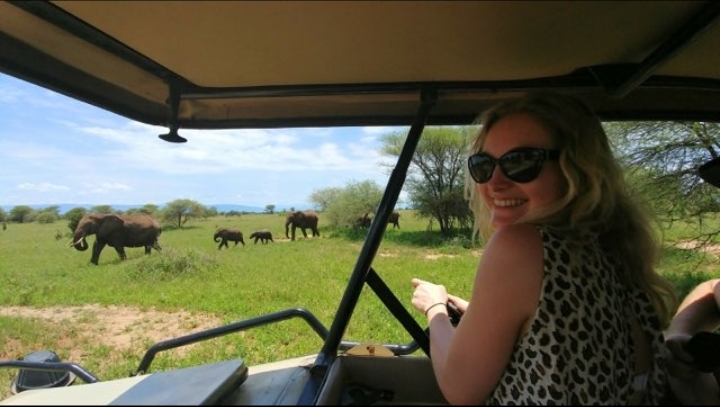
You will be driven around in a well-maintained and comfortable 4X4 Toyota Landcruiser with a pop-up roof for game-viewing. Window seats are also guaranteed for each passenger.
Are meals included in the package price?
All meals while on your safari expedition are included in your package price (with the exception of breakfast on your first day, and dinner on the last day). On a camping safari you will have a  Foot On Kili Adventure cook will prepare home-cooked food at the campsite. While on a lodge safari you will dine at the respective accommodations for breakfast and dinner.
During your game drives, picnic lunch boxes and mineral water will also be provided, but alcohol and snacks are not included in the price. Also, please let us know if you have any special dietary requirements or food allergies and we will do our best to cater for them.
What should I pack?
Please visit our post “What Should I Pack For My Safari?” for our top recommendations. We can also email you a checklist upon request.
Are there any luggage restrictions?
As space in the vehicle is limited, we generally advise you to bring a maximum of 15kg luggage in a soft bag or rucksack. In addition to this, you can also bring one small bag for personal belongings like cash, cameras, phones, travel documents etc…
Please refrain from bringing bulky suitcases as this can cause problems when storing luggage. Any luggage you do not require on safari can be stored safely at your hotel or at the Kilimanjaro Expert Office.
If you are being picked-up or dropped-off at the airport before or after your safari, please speak to us directly about what we can do with your luggage during your safari.
Should I bring some cash with me?
It’s advisable to bring some cash with you for extras like souvenirs, snacks, drinks and tips. If you are planning to use USD, please ensure notes have been issued on/after 2006 as earlier dated notes will not be accepted in Tanzania.
Should we tip?
Tipping is a customary practice within the tourism industry in Tanzania. While we pay fair and ethical salaries, our staff also rely on tips as part of their income. Generally we advise to tip $20 USD per day for the guide, and $15 USD for the cook (if you are on a camping safari). This can be divided by everyone in the group and should be given to your guide/cook at the end of the safari.
What are the visa requirements for Tanzania?
Foreign nationals require a tourist visa to enter Tanzania. For this you must have at least six months validity remaining on your passport. This can usually be purchase easily at the airport upon arrival at a cost of $100 USD cash for US citizens and $50 USD cash for all others. However, we do encourage you to contract your respective embassy for the latest visa regulations before your arrival.
What vaccinations are needed for Tanzania?
Please seek advice from your medical centre or doctor’s surgery regarding vaccinations and malaria prophylaxis. You may also be required to show a Yellow Fever Certificate at the airport when entering Tanzania. Please ensure that you have had this vaccination and remember to bring the certificate with you!